Queen Fine remove mold air conditioner ducts – Dubai
If you want to remove mold from air conditioner ducts, the first step is to understand why the growth appeared. Mold and microbial growth are strongly associated with persistent moisture, condensation, leaks, poor drainage, or damp insulation. Simply wiping the visible surface may not solve the underlying problem, especially when contamination extends into areas that are difficult to reach.
Queen Fine Cleaning & Technical Services provides professional AC duct cleaning and mold-focused cleaning support in Dubai and the UAE. Our aim is to address visible contamination carefully, improve cleanliness of accessible duct surfaces, and identify conditions that may allow the problem to return. For help, visit https://queenfineuae.com/ac-duct-cleaning-service/ or WhatsApp 0547777466.
Why Mold Can Develop Inside Air Conditioner Ducts
Air-conditioning systems create opportunities for condensation, particularly where temperature differences, humidity and insulation are not well controlled. If moisture remains on or inside duct surfaces, around coils, or in connected areas, it can create conditions where mold growth becomes possible. Water leaks and blocked drainage can make the situation worse.
The important point is that mold is not simply a dirt problem. A cleaning service can remove contaminated material from reachable surfaces, but moisture control is essential if you want to reduce the chance of recurrence. Any persistent leak or wet insulation should be investigated as part of the solution.
Signs of Possible Mold in HVAC Ducts
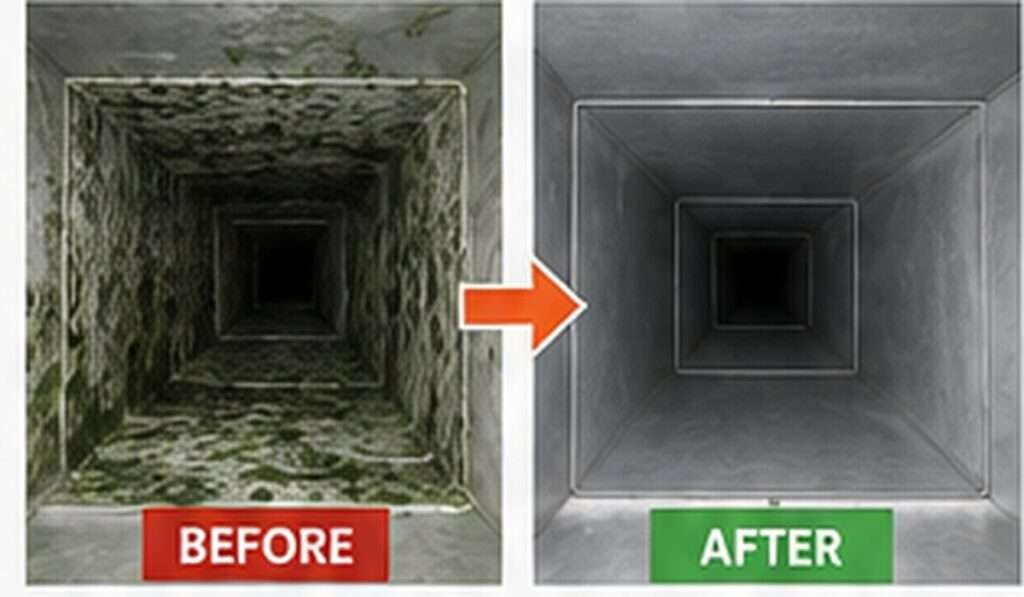
Visible dark or greenish growth inside accessible duct areas is an obvious warning sign, but other clues can include a persistent musty smell, recurring dampness near vents, or a history of water leakage around the HVAC system. Odor alone does not prove that mold is present, because other HVAC conditions can create unusual smells.
If you suspect mold, avoid disturbing a heavily contaminated area unnecessarily. A professional inspection can help determine the extent of the issue and whether the affected material is appropriate for cleaning or needs specialist remediation or replacement.
Why DIY Mold Cleaning May Not Be Enough
Home users may be able to clean a small visible surface, but commercial or centralized duct systems are more complex. Ducts can be long, insulated, or difficult to access, and aggressive brushing or unsuitable chemicals can damage surfaces or spread contamination.
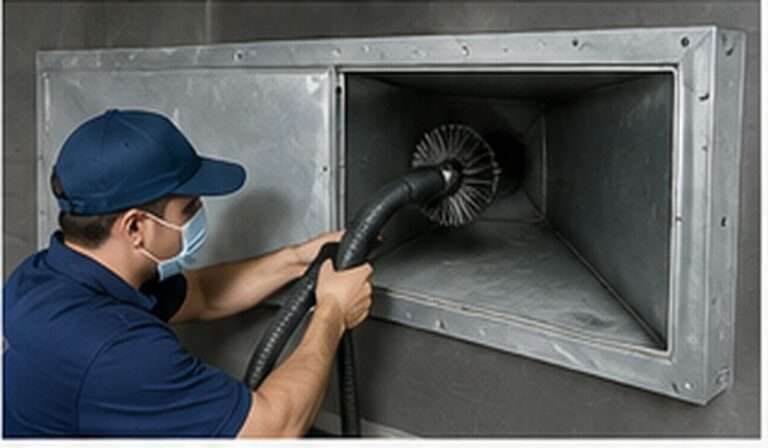
Professional cleaning provides a more controlled method. The technician can identify accessible contaminated areas, use suitable protective equipment and cleaning tools, and keep the work focused. If the contamination is extensive, involves porous insulation, or is linked to a major moisture problem, specialist remediation may be recommended instead of ordinary cleaning.
Our Mold-Focused AC Cleaning Approach
Queen Fine begins by understanding where the suspected contamination is located and what may be causing it. We prepare the work area, use appropriate containment and cleaning methods, and focus on accessible surfaces within the agreed scope. Depending on the condition, the service may include duct cleaning, removal of loose debris, targeted hygiene treatment, and a final inspection.
Our goal is to leave the serviced areas cleaner and to make the next maintenance decision easier. We also communicate when a condition appears to require additional technical work, such as leak repair, insulation replacement, drainage correction, or specialist remediation.
Mold Removal and Indoor Air Quality
Removing mold-contaminated material can be an important part of improving the cleanliness of an HVAC system. However, no cleaning company can responsibly promise that every mold-related issue will disappear after one visit without addressing the source of moisture.
A complete approach combines cleaning with prevention. Filters, coils, drainage, insulation, humidity and building conditions should all be considered. Where people are experiencing respiratory or allergy symptoms, professional medical advice is appropriate because symptoms can have many causes and should not be attributed to HVAC mold without proper assessment.
When Duct Materials Need Special Attention
Some duct systems contain porous or insulated materials that are not always suitable for aggressive cleaning. If mold has penetrated deeply into porous insulation, surface cleaning may not be enough and a specialist may recommend removal and replacement of affected sections.
This is why a careful inspection matters. A reputable service provider should tell you what can realistically be cleaned, what requires technical repair, and when specialist remediation is more appropriate. The safest plan depends on the condition and construction of the system.
Preventing Mold from Coming Back
The best long-term strategy is moisture control. HVAC drainage should remain clear, leaks should be repaired quickly, and condensation problems should be investigated. Insulation should be maintained so cold surfaces do not remain excessively wet. Filters should also be serviced according to system requirements.
Facility teams should keep an eye on areas around indoor units, access panels and drains. If dampness or odor returns after cleaning, do not simply repeat the cleaning without investigating the source. Recurrent growth is often a sign that an environmental or mechanical condition still needs attention.
Professional Mold and Duct Cleaning in Dubai
When you need to remove mold from air conditioner ducts, Queen Fine can help you assess the cleaning requirement and determine the most practical next step. Share photographs, the building type and any known water or condensation issue on WhatsApp so the scope can be discussed before the visit.
Learn more at https://queenfineuae.com/ac-duct-cleaning-service/ or contact 0547777466. Professional duct cleaning, combined with moisture control and appropriate technical repairs, provides a more responsible path than simply covering up mold odors or visible growth.
The Importance of Moisture Investigation
When mold appears inside an air-conditioning duct, the cleaning plan should be paired with a moisture investigation. Condensation, leaks and damp insulation can create the same problem again after the visible growth is removed. A successful maintenance strategy therefore asks what allowed the contamination to develop in the first place.
Queen Fine can point out obvious moisture-related conditions encountered during the cleaning process, while specialized leak or HVAC repair work can be handled as a separate technical task when required.
Protecting Occupied Spaces During Cleaning
Mold-related cleaning should be organized carefully in occupied buildings. The work area can be prepared so loose material is collected rather than spread through nearby rooms, and sensitive surfaces can be protected. The exact control measures depend on the site and contamination level.
For businesses, this preparation is especially important when the affected HVAC system serves multiple rooms. A controlled sequence helps keep the cleaning practical and minimizes unnecessary interference with normal building use.
When Replacement May Be Better Than Cleaning
Not every contaminated material can be restored through cleaning alone. If porous insulation or other absorbent materials have been heavily affected, replacement may be a more appropriate solution than repeated surface treatment. The decision depends on the material, contamination extent and technical condition.
A responsible cleaning provider should explain this limitation clearly rather than promising that every affected surface can be permanently restored.
Mold Prevention as an Ongoing Process
Once the immediate contamination is addressed, the focus should shift to prevention. Maintain drainage, watch for condensation, repair leaks promptly, keep filters in good condition and investigate recurring odors. These simple controls can help reduce the conditions that allow microbial growth to return.
For commercial properties, recording the cause, cleaning date and follow-up work can also help maintenance teams identify recurring moisture patterns and improve the building's long-term HVAC care.
Do Not Hide a Returning Mold Odor
If a musty odor returns after cleaning, masking sprays or fragrances are not a substitute for investigating the HVAC system. A returning odor can indicate that moisture or contamination remains in the area.
A follow-up inspection is more useful because it can determine whether the problem is in the ducts, near the coil and drain, in insulation, or elsewhere in the building.
Why Professional Assessment Matters in Larger Buildings
Central HVAC systems may connect several rooms, floors or tenants. When mold is suspected in one part of such a system, the investigation needs to consider the relationship between zones and the location of the contamination.
This is another reason professional assessment is preferable to treating only the first visible patch without understanding the larger air path.
Cleaning Is One Part of the Solution
A responsible mold-control plan can include cleaning, moisture correction, material replacement where necessary and ongoing monitoring. Each case is different, and the appropriate mix depends on contamination level and system construction.
Queen Fine can help identify the cleaning portion of the work while clearly noting when additional technical or specialist support is warranted.
Follow Up After Mold Cleaning
After mold-focused duct cleaning, keep the serviced area under observation for recurring moisture, odor or visible growth. If the problem returns, investigate the source instead of assuming the ducts simply need another cleaning. Good follow-up combines cleaning records with moisture correction and appropriate technical inspection where necessary.
A Preventive Approach Is Better Than Repeated Cleaning
If a duct has had mold concerns, prevention should become part of the maintenance plan after cleaning. Monitor moisture, drainage, condensation and filter condition, and respond promptly to any leak or dampness. This helps reduce the chance of recurring contamination and makes the cleaning work more useful over the long term.
Frequently Asked Questions
Can you guarantee complete mold removal?
No responsible provider should guarantee that a single cleaning will permanently eliminate every mold issue. The moisture source and the condition of affected materials also need to be addressed.
What causes mold in AC ducts?
Common contributing conditions include persistent moisture, condensation, water leaks, poor drainage and damp insulation.
Should I use bleach inside my ducts?
Using household chemicals inside HVAC ductwork can be inappropriate and may damage materials. Professional assessment is safer for significant or persistent contamination.
Can mold inside ducts affect indoor air quality?
Mold contamination can be an indoor air concern, but the impact varies by situation. Proper assessment and removal of contamination, along with moisture control, are important.
Who can I contact for mold-focused AC duct cleaning?
Contact Queen Fine Cleaning & Technical Services on WhatsApp at 0547777466 or visit https://queenfineuae.com/ac-duct-cleaning-service/.
Ready to Book?
Contact Queen Fine Cleaning & Technical Services on WhatsApp at 0547777466 or visit https://queenfineuae.com/ac-duct-cleaning-service/ to discuss your requirements and arrange the appropriate AC duct or HVAC cleaning service in Dubai and the UAE.